Introduction
This article provides an overview of monitoring in the Webdock dashboard, including available monitoring methods, rule configuration (global and server-specific), and how alerts and callbacks are triggered.
A Look At Monitoring
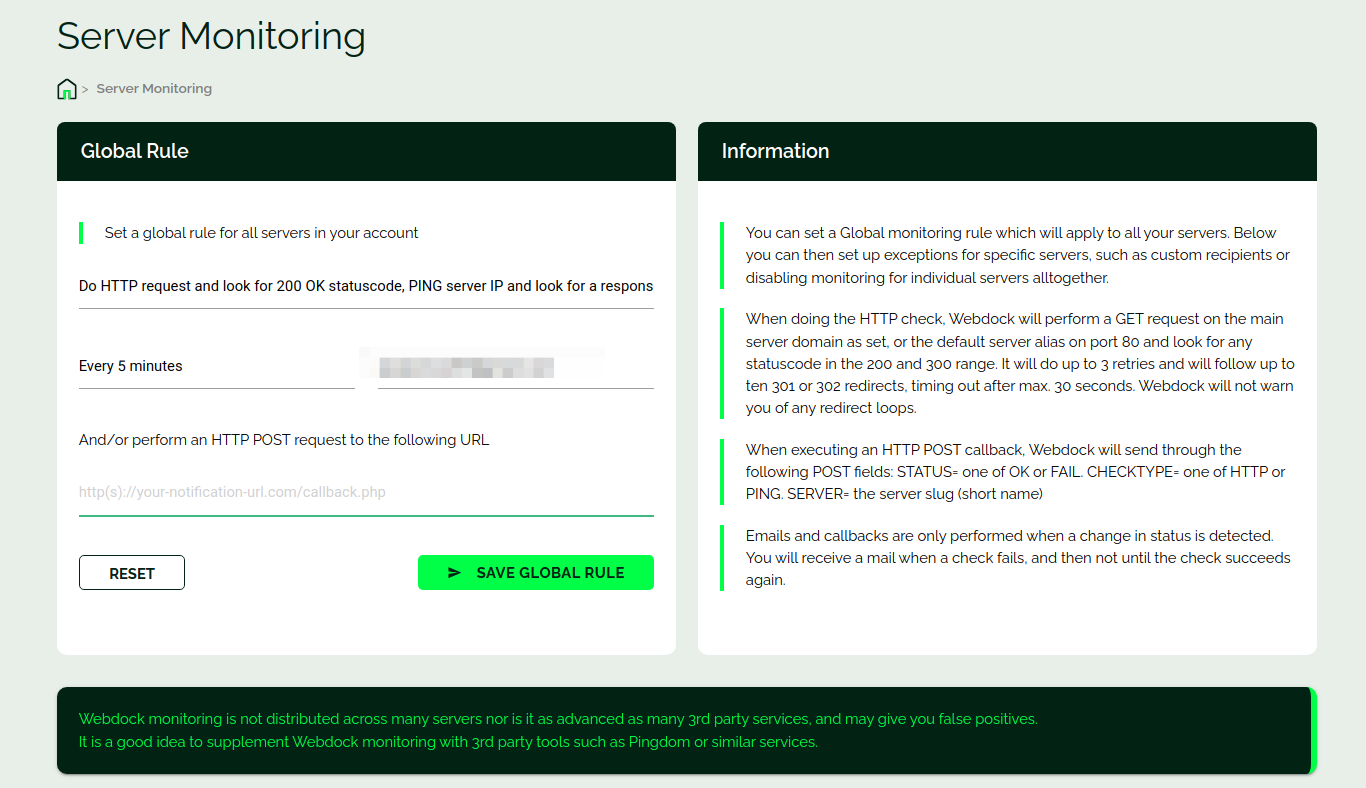
The ‘Monitoring’ page provides an interface for configuring monitoring rules across your infrastructure. It includes options to define global rules that apply to all servers and server-specific rules that override global behavior for individual servers.
Monitoring Methods
ICMP Ping
This method performs periodic ICMP ping checks against the server IP at a defined interval and triggers an alert when the server becomes unreachable or fails to respond.
HTTP GET
This method performs an HTTP GET request and triggers an email notification if the response status code falls outside the 2xx–3xx success range.
In addition to email alerts, a callback (webhook) is triggered if a callback URL is configured, allowing integration with external notification services such as Pushbullet or Pushover.
The monitoring interface includes a information panel that provides additional details about each monitoring method, including request behavior, response validation, and alert conditions.
Rule Types
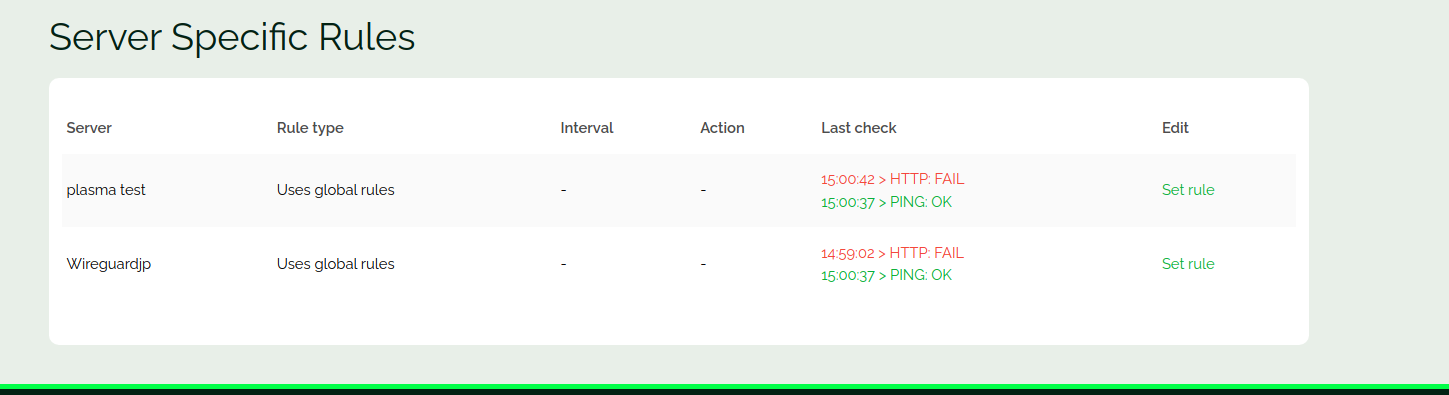
Webdock provides two rule types: global rules and server-specific rules. By default, all servers inherit and use the configured global rule.
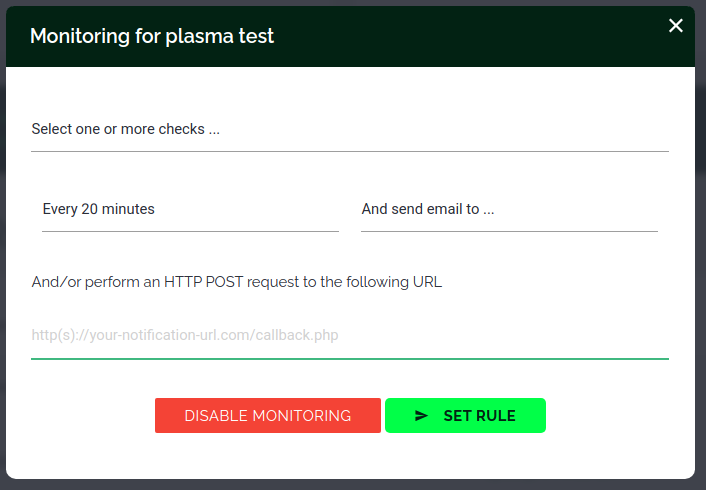
Server-specific rules are useful when a global rule does not apply to all servers. For example, if a global rule includes both ICMP ping and HTTP GET checks, a server without a running web server (no service listening on port 80) would generate false alerts. In such cases, a server-specific rule can override the global configuration and apply only an ICMP ping check to that server, preventing false alerts.
To configure a server-specific rule, click the ‘Set Rule’ button for the target server. This opens a configuration dialog where you can select the monitoring method, define intervals, and adjust alert conditions.
Conclusion
Monitoring enables automated availability validation for your servers using configurable rules, allowing you to detect outages and service failures and receive alerts or trigger external integrations for rapid response.


