Introduction
This article explains how to manage scripts in the Webdock dashboard, including adding scripts to your collection, creating custom scripts, and preparing them for execution on servers.
A Look at Scripts
From this screen, you can create, edit, delete, and organize scripts in your account. These scripts can later be executed on servers from the ‘Server Scripts’ interface in server management.
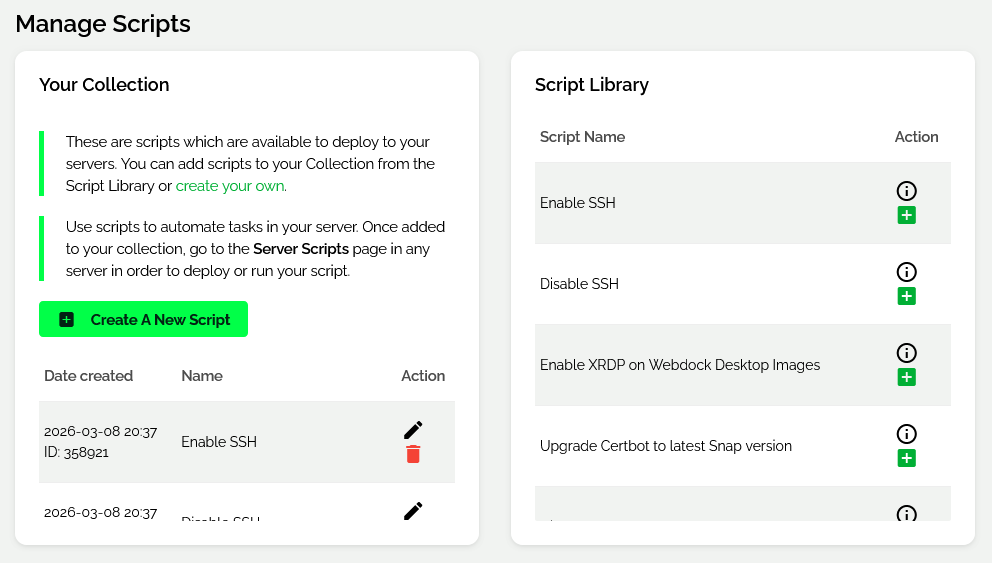
The ‘Your Collection’ section lists scripts stored in your account, and allows you to edit and delete them. The ‘Script Library’ section displays predefined scripts published by us that can be added to your collection.
For example, to disable phpMyAdmin on a LEMP/LAMP server, add the ‘Disable phpMyAdmin’ script from the ‘Script Library’ to your collection, then deploy it from the server-level script interface.
You can also create custom scripts by clicking the ‘Create A New Script’ button and defining the script content for reuse across servers. Custom scripts can be defined for tasks such as restarting services, automating configuration changes, or performing maintenance operations.
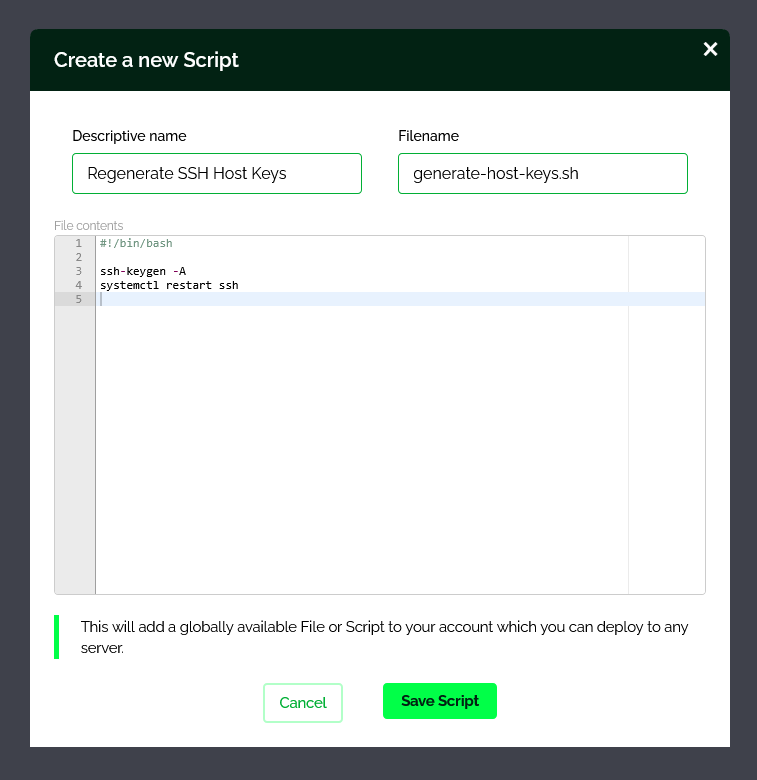
All scripts are executed as the <strong>root</strong> user on the server. Do not use ‘sudo’ within scripts. To run commands as another user, explicitly switch users within the script.
Conclusion
The Scripts feature provides centralized script management, allowing you to store reusable automation tasks in your account and apply them across servers as needed.


